Showing posts with label Search Expeditions. Show all posts

Friday, September 9, 2011

BBC Article on Franklin Expedition


I was interviewed last week by the BBC on the Franklin Expedition - does that put me in the exulted stratosphere of now being considered an "expert"? Whooot! - and here is the resulting article by Kate Dailey.

I'm pleased to see she interviewed my friends, and true experts on this, William Battersby and Russell Alan Potter, as well as Marc-Andre Bernier of Parks Canada and Ron Carlson.


Franklin expedition: Will we ever know what happened?

By Kate Dailey

BBC News Magazine

The Franklin expedition was last seen near Greenland in July 1845.

Canadian explorers have drawn a blank in the latest hunt for the remains of Captain Sir John Franklin's fatal expedition, 160 years after he took 129 men deep into the Arctic. But will the mystery of the doomed crew ever be unravelled?"

In 1845, Capt Franklin, an officer in the British Royal Navy, took two ships and 129 men towards the Northwest Territories in an attempt to map the Northwest Passage, a route that would allow sailors to travel from the Atlantic to the Pacific via the icy Arctic circle.

Stocked with provisions that could last for seven years, and outfitted with the latest technology and experienced men, the two ships - HMS Erebus and HMS Terror - were some of the biggest, strongest, vessels ever to make the journey.

But the men vanished into the frozen Arctic, leaving a few clues but no explanation as to what went wrong.

The first search party set off in 1848 and searches involving teams from Canada, the UK, and the US have continued ever since. Last week, representatives from Parks Canada announced the results from their search this summer, which proved unsuccessful.

Captain Sir John Franklin had sailed the Arctic three times prior to his fateful trip "What people have been looking for has changed. We've given up looking for survivors, we've given up looking for bodies. Now we're just looking for any answers," says William Battersby, who wrote the biography of James Fitzjames, the captain of the Erebus.

"The extraordinary thing is that despite all this effort, after 160 years and by thousands of people, we still don't know where the ships are, and what happened on the expedition, or what happened to most of the men."

Scattered remains

Explorers have found rock cairns with messages from sailors who abandoned ship. They've taken oral history from Inuit people whose ancestors saw the ships get stuck in giant ice floes. In several cases, they've dug up the bones and preserved bodies of the ship's crew. But they've found no ships, no logs, and no sign of Franklin himself.

In subsequent years, a rough sketch of the troubles emerged. During the first winter, the crew disembarked, travelled south to hunt. Franklin left a reassuring message in a rock cairn, signed "All well". A month later, he was dead.

A year later, the crew returned to the cairn and updated the note. By that time, 15 sailors had died.

"If it had just been that, it would have been one of the biggest disasters of Arctic exploration," says Ted Betts, a Toronto lawyer and author of the blog Franklin's Ghost. But it wasn't just that.

From that time on, things only got worse. The men, sickened from scurvy, tuberculosis and lead poisoning, got weaker and weaker. They reportedly abandoned ship in 1848, only to meet a cold death elsewhere.

In 1859, an explorer sent by Franklin's wife travelled to the spot where the ships had been abandoned. He didn't find the Terror or the Erebus. Instead, he found a small whaleboat, full of books, chocolates, and the skeletons of two sailors.

The boat, says Russell Potter, professor of English at Rhode Island College, was pointed towards where the abandoned ship once sat.

"Maybe they weren't trying to get away, but to get back to their ship and die in comfort," he says. "It's a very poignant arrangement."

Two other locations offered a concentrated amount of remains, says Battersby. "They do seem to be associated with men who just abandoned ship, gave up hope of ever being rescued, and sadly, gradually, cannibalised the bodies of their comrades."

A few fully-preserved corpses have been found in the snow as well. But the bodies of others, including Franklin, are missing.

"They simply disappeared. It's like Apollo 13 went around the moon and never came back again," says Battersby.

"They never had a date of death, a place of death. They're immortals who are trapped between life and death. Are they ghosts? How long did the last one live? We just don't know."

Desolate and desperate

For Ron Carlson, a Chicago architect and licensed bush pilot, it's easy for him to understand why, after all these years, the ships are still missing - and how desolate the last days must have been for men on that doomed ship.

"It's vast. When I flew, I could look out over Victoria Strait and see 50 miles of ice pack in all directions," he says. "It's like the surface of the moon, but without any marks."

The broad and punishing size of the search area dwarfs the high-tech equipment and meticulous research used by the Parks Canada team, and the other explorers before them.

The fate of the ships inspired artwork, music and literature, including this sketch by Owen Stanley "Both of the ships were caught in the ice for two years but slowly drifting south in a very large body of water," says Marc-Andre Bernier, chief of underwater archaeology services at Parks Canada.

That could mean that the ships are hundreds of miles apart. "For us, it's just as important to know where they're not," he says, so that future searches can start fresh.

For sailors on the Terror and Erebus, the barren landscape and dim prospects possibly only added to an increasing sense of foreboding.

"It seems very clear from several sources that the men on these ships suffered from terrible lead poisoning, which leads to depression," says Battersby, who read the records from an earlier trip by the Terror to the Arctic.

"The account of the Terror's voyage of that year says how bad the atmosphere was, how demoralised people were and how depressed they all were."

Battersby believes that the ships themselves, which had an internal pipe system to melt ice and provide fresh water, was the source of the poison.

Finding the ships could prove this theory. It would also bring to a close a search first launched in the time of Queen Victoria. But it wouldn't end the mystery.

"It's really just the beginning," says Betts. The papers, artifacts, and infrastructure will provide a whole new raft of information and leads - and more fodder for followers of the Franklin expedition's sad fate.

Tuesday, September 6, 2011

Arctic airship deal signed

Hmmmm.... Now where have we heard this idea before?

I certainly hope these well-intentioned folks have studied their history.


Arctic airship deal signed

The idea has been floating around for years, but a deal between a northern aviator and a British manufacturer could finally see giant airships sailing through Arctic skies within three years.

"It’s been the next big thing for a long time," said Rolf Dawson of Yellowknife-based Discovery Air, which recently signed an agreement in principle with the United Kingdom’s Hybrid Air Vehicles (HAV) to develop and bring in the first specially adapted airships to the land of bush planes and ice roads.

"We’re working toward a commercial agreement which will stipulate how many aircraft we’re going to commit to buying, what the timing of the delivery and what the payment terms are going to be."

Airship boosters have long suggested that using lighter-than-air craft to haul equipment and supplies could change the economics of development in remote areas.

Airships require neither ice roads nor runways. Both are expensive to build and increasingly tough to maintain in the warming northern climate. Airships use far less fuel than planes and have massive lift capacity. The HAV design can haul 50 tonnes — about twice the payload of a Hercules airplane.

[More]

Thursday, September 1, 2011

Artifacts recovered from HMS Investigator


Well, looks like another season passes and nothing further on the Erebus and Terror front, but perhaps we are getting closer and closer as each acre is painstakingly ruled out year after year.

Not a complete lost summer by any respects. Especially since some artifacts have been recovered from HMS Investigator, including a musket, some rigging, some sheathing, and the sole of a leather shoe.


Talk about being, um, frozen in time!!

Divers find Northwest Passage discovery artifacts

CBC News Posted: Sep 1, 2011 11:16 AM CT Last Updated: Sep 1, 2011 1:59 PM CT

A musket and other artifacts from HMS Investigator, the ship abandoned in the Canadian Arctic in 1854 during the hunt for Sir John Franklin’s lost expedition, have been recovered by divers. The ship is credited with discovering the Northwest Passage.


Shoes, a musket, a copper sheet, and parts of the ship’s rigging were among the items brought up over nine days this July from the wreck discovered last summer in Mercy Bay, off Banks Island in the Northwest Territories. Divers were lucky enough to find the usually ice-covered bay largely open water during the expedition.


John Franklin's party disappeared while searching for the Northwest Passage in 1848 following their captain's death partway through the expedition. Their ships, HMS Erebus and HMS Terror, haven't been found, despite numerous searches.

HMS Investigator, captained by Robert McClure, was sent in 1850 to search for Franklin's crew and their ships.

After more than two years trapped in the ice at Mercy Bay, crew members were rescued by a Royal Navy sledge team, who took them to another ship.


In the end, McClure and HMS Investigator succeeded where Franklin failed — they are credited with finding the Northwest Passage.

Marc-AndrĂ© Bernier, the Parks Canada scientist who led the expedition, said that “to dive on that shipwreck that is literally frozen in time... with artifacts on the deck” was the highlight of his career of more than 20 years.

Archeologists photographed and mapped the ship using sonar and video to determine its state of preservation.

"Although the hull is basically survived up to the main deck, the main deck is a litter of timbers,” Bernier said at a news conference.

The ship continues to be damaged by ice, he said, but there was a lot of sediment within the interior of the ship.

“This is basically the best conditions to preserve artifacts,” he added.

The buried artifacts were left untouched, but about 16 lying outside and on the deck were recovered because they were exposed, and researchers feared they could become damaged before an expedition could return to the site.

Bernier said the most exciting was the copper sheeting, which protected the ship's hull from marine organisms. That's because the copper can be chemically tested and compared to copper found at other sites to figure out whether those pieces originally came from HMS Investigator, or compared to the copper on other ships.

He added that some of the items, such as the shoes, are of interest because they appear to include waterproofing or other modifications for use in the Arctic.

The collected artifacts included copper sheathing that protected the hull of the ship - considered by archeologists to be the most important find. Chris Rands/CBCResearchers also conducted land surveys as part of the expedition, collecting an inscribed wooden barrel top, an arrow and a tin can near a cache linked to Robert McClure, the captain of HMS Investigator.

They identified four new archeological sites, including a small aboriginal camp and rock cairn.

At one point, the researchers responded to a search and rescue call that brought them near a previously known archeological site believed to have been used as an observatory by Franklin's crew between 1846 to 1848. There, they checked up on the site and collected artifacts that included bottle glass, copper nails, twine or rope, tent canvas, and pieces of tobacco smoking pipes.

Franklin search to continue: Kent
However, as previously announced, they did not manage to locate HMS Erebus and HMS Terror, Franklin's long-lost ships, in the third year of a three-year hunt for them.

Environment Minister Peter Kent gave his assurances that government-funded expeditions will continue to visit the Arctic each summer to continue the search and map the Arctic waters that are becoming increasingly ice-free and navigable.

"Certainly, I can assure you that this will be an ongoing project," he said.

Kent noted that while HMS Investigator was trapped in a bay, where it stayed put, HMS Erebus and HMS Terror may have drifted very long distances to two very different sites, based on Inuit oral history indicating their locations.

Bernier said the area that needs to be searched is enormous, but that large swaths are ruled out each year.

"We are getting closer because we have covered more territory," he said.

HMS Erebus and HMS Terror are considered by Parks Canada to be National Historic Sites, Bernier added.

"They are the only National Historic Sites for which we don’t know the location," he said, adding that the department has the mandate and the responsibility to find them.


Thursday, July 14, 2011

Nunavut defends rejecting Franklin search bid [Updated]


The Nunavut Department of Culture, Language, Elders and Youth (CLEY) has come out to defend its decision to reject Ron Carlson's application for a permit search for Franklin sites from his airplane.

I remain quite unconvinced.

Doug Stenton, the department's heritage director, and the bureaucrat specifically highlighted in particular by Carlson on his blog because of the personal jail-time threats, is quoted as saying: "We feel for that reason that it's very important that these sites are investigated by individuals who have the proper experience, the proper qualifications, training. I can't think of any reason why a well-resourced, competent, professional team wouldn't get a permit."

Excuse me, but... baloney.

If that is the case then:
  • Why was the Procom expedition not approved two years ago? They had more than adequate resources, experience and professional qualifications and training. They are one of the leading underwater search experts.

  • Why was Carlson only rejected once he got there? They had nearly a year to determine whether he had the qualifications or not. Carlson was well qualified for what he was planning to do. In both cases, well-resourced, competent and professional teams were trying to advance knowledge at their own expense, for the benefit of all, agreed to provide Nunavut/Canada with all of their research and to keep it from the public so it was not misused. Each had long pedigrees of showing respect for archeological sites.

  • Why was Carlson rejected after the Inuit community actually on King William Island had approved his plans?

  • Once Carlson's permit was rejected, why threaten him with jail time for merely flying over King William Island, something CLEY had permitted him to do a few seasons ago and something they only have questionable authority to do (for just a fly-over and photography)?

  • [Update]As noted in the comments, David C. Woodman was also rejected by CLEY despite being one of the leading experts with more than adequate search history and credentials. Really makes you think something else is going on here.


  • I am somewhat grateful for CLEY coming forward instead of hiding behind a great wall of bureaucracy. And I completely understand and share the concerns they have about tourists and greedy excavators.

    But why pretend to offer permits if they are not going to be issued? They should at least clarify what the criteria are because, even according to their own criteria as stated, it seems they are rejecting fully competent expeditions.

    I completely agree with McGoogan on this. There ought to be some way to find a compromise. Most of the great advances in Franklin research has come from private enthusiasts like Robert Rondeau and Ron Carlson. Their spark and curiosity has not only resulted in most of the "finds" but also in the sense of importance of this archeology and the need to protect it, not to mention the expeditions now being conducted by Parks Canada itself.

    Nunavut defends rejecting Franklin search bid
    CBC News Posted: Jul 13, 2011 3:50 PM CT Last Updated: Jul 13, 2011 3:50 PM CT

    Nunavut government officials are defending their decision not to give a Chicago man an archeological permit to search for Sir John Franklin's grave in the Arctic.

    Nunavut heritage director Doug Stenton says the territory is not overly trying to protect high-profile undiscovered archeological sites. CBC
    Ron Carlson, a Chicago-based architect, pilot and Franklin history buff, had wanted to fly over King William Island with his DeHavilland Beaver aircraft and use thermal imaging equipment to look for the British explorer's grave.

    But Carlson told CBC News this week that his application for a territorial archeological permit was rejected just as he had arrived in Nunavut late last month.

    The territory's Department of Culture, Language, Elders and Youth, which is responsible for issuing the permit, ruled that Carlson was not qualified.

    Doug Stenton, the department's heritage director, said many people want their name associated with Franklin, whose doomed 1845 voyage and disappearance in the Northwest Passage has fascinated historians for almost 170 years.

    "We feel for that reason that it's very important that these sites are investigated by individuals who have the proper experience, the proper qualifications, training," Stenton told CBC News on Tuesday.

    Nunavut is home to about 12,000 known archeological sites, and Stenton said his department needs to ensure the people who study those sites have the expertise and tools required to do the job.

    Skulls of members of the Franklin expedition were discovered by William Skinner and Paddy Gibson in 1945 at King William Island in Nunavut. National Archives of Canada/Canadian Press
    "We take that responsibility very seriously, and we review and consider every application on its own merits," Stenton said.

    Carlson is not the only potential Franklin searcher to have been denied a territorial permit. In 2009, Stenton's department rejected a private group's application to locate Franklin's lost ships, HMS Erebus and HMS Terror.

    Nunavut has supported the Canadian government's expeditions to locate Franklin's ships. Archeologists with Parks Canada are set to search in an area west of King William Island next month.

    Carlson said he feels the Nunavut government never seriously considered his application and is intentionally blocking private searchers from accessing Franklin sites.

    But Stenton insisted that it's not a case of overly protecting high-profile undiscovered archeological sites.

    "I can't think of any reason why a well-resourced, competent, professional team wouldn't get a permit," he said.

    Author and historian Ken McGoogan, who has written four books on Arctic exploration, said he does not think there was any conspiracy on the Nunavut government's part to keep Franklin searchers out.

    "I am torn with regard to the story of Carlson," McGoogan said.

    "Obviously, the government has a major role to play in making sure the sights are undisturbed. But he was only going to be flying over, so I think a compromise could have been worked out."

    Monday, July 11, 2011

    CBC reporting on bureaucratic interference with Carlson's expedition

    Ron Carlson's plans have been foiled by bureaucrats.

    And now it is hitting the news.

    If you have been following Ron Carlson's very interesting and different search for Franklin graves using fly-over thermal photography closely on his blog (as we have), then you will already know the almost Kafka-esque permitting mountain he attempted, and failed, to climb.

    Carlson provides the gory details here (short version) and here (long version). Carlson remembers that he is not the only one to receive this kind of treatment from the Nunavut Department of Culture, Language, Elders and Youth (CLEY) here.

    Carlson wonders if CLEY and Parks Canada are jealously protecting Franklin relics and possible Franklin finds (most especially the lost ships themselves) for themselves. And even if they are, in fact, going so far as to collect possible search expedition sites and technologies from the elaborate and detailed applications for permits they have no intention of providing.

    Perhaps that is why we haven't heard a single word from or about Bear Gryls "find" in the James Ross Strait area.

    Maybe with this kind of publicity, we will get some reaction from the bureaucrats at CLEY. Even if they don't explain themselves, and why criminal charges and threats of jail time were necessary for such innocuous activity, they could at least lay out some clearer criteria for when they may actually issue a permit.

    Friday, July 1, 2011

    More details on 2011 searches


    Some of the details of the planned Parks Canada searches for HMS Erebus and HMS Terror are being reported on. (Prior related post.)

    The two-phased search - phase 1 in July going back to the HMS Investigator wreck and phase 2 in August searching for HMS Erebus and HMS Terror - appears to be three phases, or at least the second phase for the search for HMS Erebus and HMS Terror will be done in two parts: one part searching off the west coast of King William Island in the vicinity of where the ships were abandoned and one part searching in the Queen Maud Gulf region where Inuit testimony collected by Charles Francis Hall indicates one of the ships may have been wrecked. According to the Parks Canada backgrounder:

    The 2011 search for the Franklin vessels will shift northward from the O’Reilly Island area to Victoria Strait where the second vessel is thought to have foundered. This new area is a priority for CHS and CCG in their mandate to promote the safety of shipping though the principal navigation corridors of the Canadian Arctic and Parks Canada will take advantage of this opportunity to embark on the search for the second vessel.


    So that is good. More of the historical information does lead one to the Queen Maud Gulf region as the last resting place of at least one of the ships.

    Interestingly, according to this report, "the search area has been whittled down from notes and messages that were written by crew members before their deaths, by oral histories passed down through generations of Inuit, and by other means of archeological sleuthing. [...] “We do have clues,” said lead investigator Marc-Andre Bernier. “We know where the ships were abandoned." "

    Which, of course, is quite interesting because this is not actually altogether crystal clear according to David Woodman's investigations of Inuit oral testimony given to Charles Francis Hall and others. We may know where the ships were originally abandoned, but there is plenty of evidence to suggest the ships, or at least one of them, were re-manned and sailed again, likely to the Queen Maud Gulf region and perhaps even near O'Reilley Island. Which Parks Canada will fortunately be searching.

    On the search technology front, we now know that Parks Canada will deploy an unmanned underwater vehicle, courtesy of the University of Victoria, with frigid water search capabilities which will cover some 100-square-kilometres with surface searches covering another 200-square-kilometres. The underwater vehicle can run for 16 hours a day before needing to have its battery recharged, apparently. According to the Parks Canada backgrounder:

    In addition to technologies already deployed which included side-scan sonar and multi-beam bathymetry, the Parks Canada-led search for the Franklin vessels will enlist a sophisticated autonomous underwater vehicle (AUV) supplied by the University of Victoria. The AUV uses a newly developed, high-resolution side-scan sonar and swath bathymetry sensor package which could allow the study of a larger area than that covered in the two previous years combined.


    So that is also good. The technology, the search area and building on three years of Parks Canada expedition research (as well as the research of many other explorers) will provide the greatest opportunity yet to find the wrecks of the missing ships or their last resting places.

    And perhaps find another piece of this 160 year old Arctic puzzle.

    Updates on the 2011 Parks Canada Arctic search expeditions will presumably be posted to or linked to from this Parks Canada site.

    The Parks Canada press release yesterday is here, with one of the backgrounders here. Some more media coverage here and here, though there is not much more information in those news reports.

    More details as I come across it.


    HMS Investigator, discovered last year by Parks Canada after 3 minutes of searching in Mercy Bay, Banks Island.

    Thursday, June 30, 2011

    Parks Canada confirms 2-phased searches for summer 2010

    Parks Canada has finally confirmed that there will be a search expedition this summer, two in fact, as well as some of the details of the search.

    The two phases will encompass a July re-visit to the site of the wreck of HMS Investigator, which was discovered last year, in Mercy Bay off Banks Island, and an August underwater search for HMS Erebus and HMS Terror in the region west of King William Island in Nunavut. No greater detail of the search area has been provided yet for the Franklin ships phase. Whether "west of King William Island" means just west or west and south is not clear which is unfortunate as the areas south and west, particularly the Queen Maud Gulf area and O'Reilley Islands area, appear most promising from the historical data.

    The expedition will set sail on the Canadian Coast Guard vessel Sir Wilfrid Laurier as they did in 2008 and 2010. The HMS Investigator expedition will take place from July 10 to 25 and will deploy various underwater cameras. They'll also investigate McClure's cache and related terrestrial sites, including the rare, ancient Paleoeskimo site. The HMS Erebus and HMS Terror search is expected to launch on August 21.

    New Technology to be Deployed in the Search for Franklin's Lost Vessels

    Government of Canada continues Franklin search expedition in Canada's Arctic

    OTTAWA, ONTARIO--(Marketwire - June 30, 2011) - The Honourable Peter Kent, Minister of the Environment and Minister responsible for Parks Canada, today announced that Parks Canada will be working with other Canadian researchers to deploy highly sophisticated underwater technology in the continuing search for polar explorer Sir John Franklin's lost ships, HMS Erebus and HMS Terror. This summer's two-phased Arctic expedition will focus on further uncovering the story of the 19th century pursuit to find the Northwest Passage and will also include underwater exploration of the HMS Investigator shipwreck located last summer off Banks Island, as well as archaeological studies of related land sites.

    "The Government of Canada is proud to be working with a nationwide team of existing and new Canadian researchers in this search for two of the world's most elusive shipwrecks", said Minister Kent. "Our collective efforts will significantly enhance this year's search capacity through the use of new technology."

    The search for Sir John Franklin's lost ships under the direction of Parks Canada will enlist a sophisticated autonomous underwater vehicle to expand the search area, supplied by University of Victoria's Ocean Technology Laboratory.

    Beginning about August 21, depending upon local weather conditions, Parks Canada and the associated organizations will continue the search for Franklin's lost vessels in the region west of King William Island in Nunavut. The expedition is a collaborative effort among Parks Canada, University of Victoria Ocean Technology Laboratory, Government of Nunavut and Canadian Ice Service. As in 2008 and 2010, Parks Canada archaeologists will be operating from the Canadian Coast Guard vessel Sir Wilfrid Laurier alongside hydrographers with the Canadian Hydrographic Service.

    "The challenging search for a Northwest Passage has captured the public imagination for more than 400 years. As an integral part of our Canadian history and development as a nation, the Government of Canada is pleased to spearhead these important archaeological expeditions in Canada's Arctic," concluded Minister Kent.

    HMS Erebus and HMS Terror were lost during Sir John Franklin's ill-fated 1845 expedition to chart Canada's Northwest Passage and the vessels have been sought for more than 160 years, creating great anticipation for their possible discovery.

    From about July 10 to 25, Parks Canada archaeologists will further study the HMS Investigator wreck from a camp in Aulavik National Park, Northwest Territories near the western end of the Northwest Passage. The camp is near the location where Captain McClure and his ship HMS Investigator were trapped in the ice of Mercy Bay while searching for the lost Franklin voyage.

    While HMS Investigator was discovered last summer, underwater archaeologists plan to dive the wreck for the first time this summer using a variety of underwater cameras, with the purpose of bringing back new information and unique underwater images. Archaeologists will also investigate McClure's cache and related terrestrial sites, including a rare, ancient Paleoeskimo site.

    For additional information on the two-phased Arctic expedition and the 2011 itineraries, please see the accompanying backgrounders at www.parkscanada.gc.ca under Media Room. As well, please visit the special feature on the Arctic expeditions at www.parkscanada.gc.ca for regular updates over the summer.

    Canadian Government to Announce Franklin Ships Search Plans

    Some new news nearly here, just before noon, on Parks Canada's northern summer search plans seeking the Franklin ships.

    (Don't ask at all why I'm alliterative all day today. Could be connected to Canada Day coming.)

    Government of Canada to Unveil Details on Archaeological Expeditions in Canada's Arc
    Thursday, 30 June 2011

    The Honourable Peter Kent, Minister of the Environment and Minister responsible for Parks Canada, will unveil plans for the summer 2011 archaeological expeditions in Canada's Arctic.

    Minister Kent will announce new details regarding the search for lost vessels of the Franklin Expedition, HMS Erebus and HMS Terror, and information on the archaeological surveys of HMS Investigator and related land sites.

    Questions can be asked by calling in via teleconference at 1-877-413-4814 (toll free)

    Access code is 5125526

    To participate, media personnel must call at 10:50.

    Please note that this advisory is subject to change without notice.

    The details are as follows:

    Date: June 30

    Time: 11 a.m.

    Location: Parks Canada
    Ontario Service Centre
    1800 Walkley Road
    Ottawa, Ontario

    That would be in half an hour so I'm going to try to call in and will update if there is anything of substance.

    Sunday, June 19, 2011

    Summer of Franklin, Take 2?

    Two bits of search-for-Franklin news.

    First, there is the intrepid and independent journey by Ron Carlson in his DeHavilland Beaver. Carlson is flying solo over the route travelled by the survivors with unique thermal photography equipment that he hopes will suggest where bodies from the expedition may have been buried, perhaps even Sir John Franklin's. Check Carlson's blog for background, updates and photos of his journey, including a discovery of a lost Hudson Bay Company outpost and an abandoned church with stainglass donated by Lady Franklin. Russell Potter puts this search in some context.

    Second, Parks Canada is quietly preparing for another search expedition this summer. After the numberous Franklin-related stories and discoveries from last summer, most especially the discovery of HMS Investigator, can we expect even more this summer? (Still waiting for any details from the very interesting and curious northwest passage of Bear Grylls and the discovery of a possible Franklin site find.)

    Search for ill-fated, historic Franklin expedition could continue this summer


    By Randy Boswell, Postmedia News
    June 19, 2011

    Parks Canada is quietly organizing a third season of searching this summer for the lost ships of Sir John Franklin — the 19th-century British explorer whose ill-fated expedition to the Canadian Arctic in the 1840s ended with the sinking of the ice-trapped HMS Terror and HMS Erebus, as well as the deaths of Franklin and all 128 men under his command.


    While a Parks Canada spokeswoman told Postmedia News that plans are “fluid” and that the agency isn’t yet ready to disclose details of the proposed mission, she said officials are working with several partners in the federal and Nunavut governments “towards obtaining various authorizations and securing the necessary logistical support to be able to have the most productive search possible.”


    Two previous searches in 2008 and 2010 were successful “in charting a navigation corridor to an area where we believe, through historic research, there is a high probability of finding the lost ships,” Parks Canada’s Natalie Fay told Postmedia News. “The area of surveying was approximately 150 square kilometres.”


    The disappearance of the Franklin vessels, a profoundly traumatic moment for Victorian-era Britain and its Canadian colonies, prompted a series of Royal Navy rescue attempts that failed to find the ships but mapped much of the Arctic archipelago, ultimately securing sovereignty over the vast region for the future Canada.


    The final resting place of the Franklin wrecks, which are believed to lie somewhere in the ice-choked waters off Nunavut’s King William Island, has eluded recent generations of searchers determined to locate one of the great global prizes of underwater archeology.


    The Canadian government announced in 2008 that it was launching an unprecedented, three-season hunt for the sunken ships, so central to the story of Canada that they’ve already been declared national historic sites despite their unknown location.


    Extensive sweeps of the Arctic sea floor were conducted in the 2008 and 2010 searches by Parks Canada and its partner agencies, including the Government of Nunavut, the Canadian Hydrographic Service and the Canadian Coast Guard.


    A planned search in 2009 was called off when the Coast Guard icebreaker required by archeologists for sea floor surveys was unavailable because of other commitments related to Canada’s increased strategic interest in its Arctic frontier.


    But federal archeologists said the resumed search for the Franklin ships in 2010 ruled out another large swath of seabed near King William Island and significantly narrowed the target zone for the 2011 expedition, which would begin in August if Parks Canada’s plans come together as expected.


    Last year’s landmark discovery of the most famous of the Franklin rescue ships — HMS Investigator, which was abandoned in the Western Arctic pack ice in 1853 — has buoyed hopes for an even greater find this summer.


    The Investigator — which had became hopelessly frozen in at Mercy Bay, just off Banks Island in today’s Northwest Territories — was finally pinpointed on the ocean floor last year by a Parks Canada team that won international acclaim for solving the long-standing mystery of that ship’s whereabouts.


    The Investigator’s commander, Capt. Robert McClure, had led his crew off the ice-locked ship onto Banks Island, where they deposited a cache of supplies that has also been excavated by archeologists.


    Both the shoreline area and the bay where the Investigator went down are today part of Aulavik National Park.


    McClure and his men, facing sickness and starvation, eventually trekked across the sea ice to Melville Island and were rescued, at last, by another British ship.


    But their combined travels by ship and foot marked a banner achievement in global exploration that Franklin and his doomed men had helped make possible — the traversing of the final link in the Northwest Passage, the polar sea route sought for centuries by European adventurers.


    “With the arguable exception of the vessels from the Franklin expedition, the Investigator is the most significant shipwreck in the Canadian Arctic,” Jim Prentice, the former minister for Parks Canada, said after the July 25 discovery last year.


    Though the Franklin ships vanished more than 160 years ago, the expedition’s many enduring mysteries have continued to attract attention from archeologists, wreck hunters, historians, songwriters and authors of popular books.


    Earlier this year, a team of British scientists announced that they had re-identified one of only two sets of human remains from the Franklin Expedition returned to Britain for burial.

    For more than 140 years, a sailor’s remains found on King William Island in 1869 — then transported to a memorial chamber in Britain — had been identified as those of Lt. Henry Le Vesconte, one of Franklin’s perished officers.


    But the first modern scientific study of the entombed bones and teeth determined that the skeleton probably belonged to another of Franklin’s officers: expedition naturalist and assistant surgeon Harry Goodsir.


    The study also shed fresh light on the theory that a disastrous illness, perhaps scurvy or tuberculosis, had caused or contributed to the demise of Franklin and his men.


    “No evidence of these diseases was found on the bones, and DNA tests proved negative for tuberculosis,” English Heritage, a British government advisory agency, stated in its summary of the new scientific findings.


    Another prominent theory about the tragedy — that lead poisoning from tinned food or the ships’ water supplies had sickened the sailors during their Canadian voyage — is still being tested using the bones.

    © Copyright (c) Postmedia News

    Tuesday, November 30, 2010

    The Summer of Franklin?

    Not quite - still no Erebus, still no Terror and still no new documents - but what a summer it was for Franklin-ophiles.

  • The discovery of HMS Investigator, as well documented by Professor Potter.


  • The publication of the first biography of James Fitzjames by William Battersby, which often reads like a great detective novel it has so many revelations about the man and his history. It is available here in Canada - go buy and enjoy it - and we will have the pleasure and the privilege of a visit by William next week for the official Canadian launch.


  • Though ultimately unsuccessful, Parks Canada did follow through with a search for the two ships.


  • The opening of a cairn alleged to hold Franklin documents, but didn't, and was supposed to have held Amundson documents, but didn't. Ken McGoogan's detective work solved the puzzle for us.


  • Then there was the very interesting and curious northwest passage of Bear Grylls and the discovery of a possible last resting place of a number of survivors (see photos below).


  • I'm sure there is more. Please add in the comments.

    What was interesting to observe was the growing interest in, and generally raised level of knowledge of, the Franklin Expedition in Canada as well as England. People without any knowledge of who Captain McClure was or what he was doing up in Mercy Bay were quite rivetted by the find. The archeological finds on land were equally important.

    But the one that has me the most on tenterhooks is the Grylls find. Grylls travelled the northwest passage via Rae Strait on a Shockwave Zodiac Hurricane Mach11 is the RIB (Rigid Inflatable Boat) with four outboard motors in 13 days! The entire expedition is described on its own website with amazing photos photos. I knew nothing about this trip until William Battersby blogged about it. Now this week, CNN even had a news broadcast on the expedition.

    Where it gets interesting to followers of Franklin started with a somewhat oblique description of a landing a tiny island

    This photo appears to be from the island they discovered:


    From the CNN clip, this photo appears to also be from the island they discovered:

    Wednesday, July 15, 2009

    More media coverage of Rondeau's expedition

    Rob Rondeau and the ProCom Diving Company's expedition this summer is suddenly getting a lot of attention. When expeditions like this get covered in Canada's so-called "national newspaper", the Globe and Mail, you know you are starting to hit the mainstream consciousness.

    On the trail of the Arctic's most enduring mystery

    An Alberta archeologist feels certain he can locate the lost ships of the Franklin expedition

    Katherine O'Neill

    EDMONTON — From Wednesday's Globe and Mail
    Last updated on Wednesday, Jul. 15, 2009 05:08AM EDT

    A marine archeologist from landlocked Alberta has set his sights on finding two of the world's most coveted shipwrecks: the long-lost Royal Navy vessels from the doomed 19th-century Franklin expedition.

    Rob Rondeau and his small team plan to travel to the central Arctic archipelago later this summer to launch a privately funded underwater search.

    The race to find the fabled shipwrecks has been continuing for more than 160 years, but Mr. Rondeau is confident his group's research and use of state-of-the-art sonar will solve the vexing mystery.


    Parks Canada was supposed to dispatch its own marine archeologists to the Arctic later this summer as part of a high-profile, three-year search for the ships that began last year. It scrubbed this year's effort because no government vessel was available.

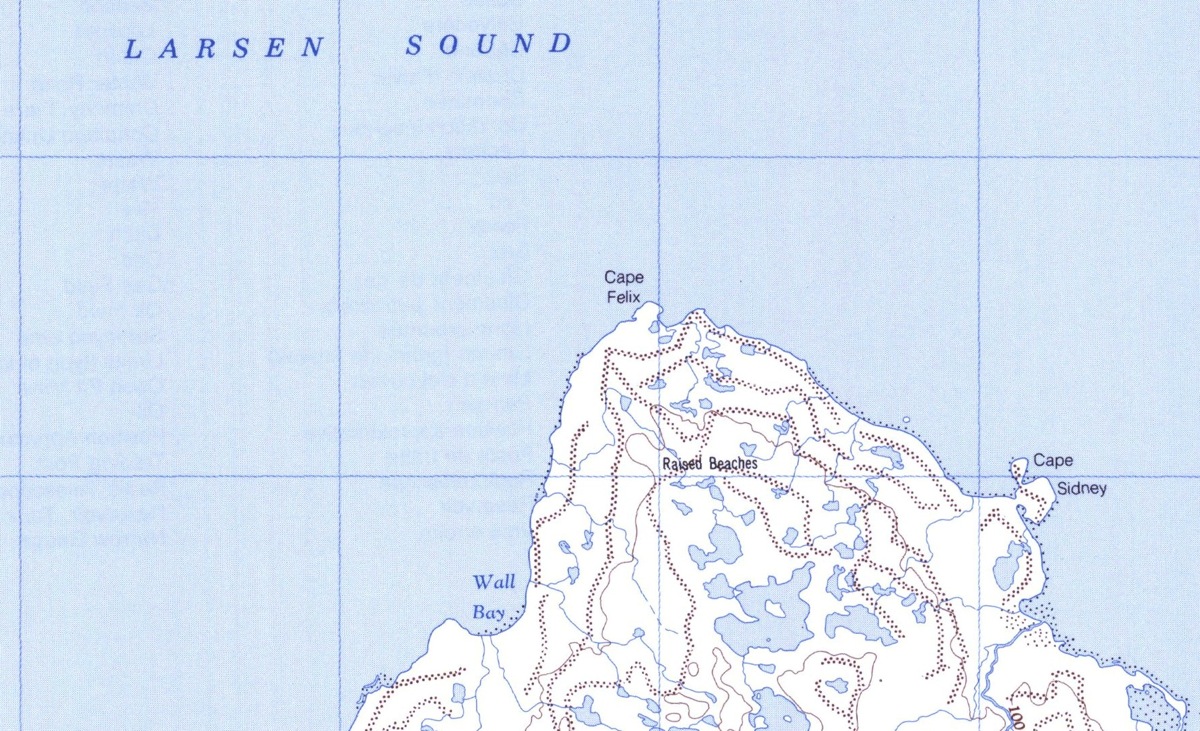
    While most modern-day Franklin hunters, including Parks Canada, have focused their attention on areas southwest of King William Island, Mr. Rondeau is confident the shipwrecks are in fact located north of the island, in the waters of Larsen Sound.

    The missing ships, HMS Terror and HMS Erebus, were part of an 1845 British expedition led by Sir John Franklin to map the Arctic and locate the fabled Northwest Passage to Asia.

    The vessels and their crews never returned, and since the late 1840s, dozens of search efforts, both public and private, have been mounted to answer one of the Arctic's greatest riddles. Graves of some of the crew and wreckage from the expedition are all that have been recovered.


    The search for the Franklin expedition over the decades has become a lifelong obsession for many people around the world, but Mr. Rondeau, who is head of Alberta-based ProCom Diving Services, said he picked the project primarily to test newly developed sonar equipment in the Arctic.


    A sidebar to the story highlighted some of the attempts to find Franklin or any relics. It notes that on Canada's Centenial in 1967, Canadian soldiers took part in "Project Franklin" to mark the occasion in which they conducted air, land and sea searches. I did not know about that historical Canadian government involvment in the search efforts. They seem to have gone a fair bit further then than the current government is prepared to do now, when searchers can't even get a ship.

    The reference to the Canadian Centennial does serve as an occasion for me to raise a topic I expect to come back to many times as this website progresses. Franklin set sail in 1845. The bicentennial 170th anniversary of that date is coming up in a few years and some of the events that could be planned, like a new book or an expedition retracing his steps or a re-enactment of the departure, would take a lot of time and planning.

    So not only is it my hope to collect here all information about any planned events, I hope to be involved and would like to know of any events or plans so that I may participate and help somehow. It is still a bit premature, here in 2009, but feel free to send me an email or a comment if you become aware of any Franklin Bicentennial 170th anniversary plans.

    Saturday, July 11, 2009

    ProCom Diving Company's "Finding Franklin: 2009 Expedition"

    The Parks Canada expedition in search of Franklin's ships may be off, but privately-funded ProCom Diving Company's "Finding Franklin: 2009 Expedition" is still going ahead this summer.

    The expedition will will depart from Resolute and travel south to around Larsen Sound - following the same route used by Franklin, and be led by Robert Rondeau, chief marine archeologist and President of ProCom. They will conduct a non-intrusive remote sensing survey underwater using side scan sonar aboard the Arctic research vessel, the Aurora Magnetica.

    From the ProCom Diving website, their description of the Finding Franklin Expedition is set out below. There is even a Facebook Group set up for the expedition, so you can keep up-to-date on the status of the expedition and any discoveries.

    The search for the Northwest Passage was one of the last frontiers of exploration in the Victorian Age. In 1845 the British Admiralty organized one more attempt to find it. Two ships, Erebus and Terror, under the command of Sir John Franklin would undertake an expedition. Their mission, to find a route through the Canadian Arctic linking the Atlantic and Pacific oceans. Two months after leaving England both ships were seen entering Lancaster Sound at the northern end of Baffin Island. That was the last time any European ever saw them.

    In 1859, the members of a search expedition, organized and paid for by Sir John’s widow, found what remains the best source of evidence as to the fate of the Franklin Expedition. On the northwest coast of King William Island they discovered a cairn made of stones. Inside was an empty food tin containing a note. It had been written by the captain of the Erebus, Capt. James Fitzjames, and his second-in-command, Lt. Graham Gore.

    The note confirmed the physical evidence found by the search party: That in late April, 1848, the crew had abandoned their two ships and had headed south across King William Island on foot.

    The “Victory Point Letter,” written on April 25th, 1848, by Captain Fitzjames accurately states the location of the cairn. It also lists the last known position of both ships - which had been abandoned three days before. Both the Erebus and Terror, the letter stated, were five leagues, approximately 28 kms, northwest of the cairn.

    Finding what remains of the Erebus and Terror would be one of the greatest marine archaeological finds of all time - rivaling the discovery of Titanic or Bismark.

    The 2009 Expedition

    A team of archaeologists and documentary film makers will attempt to find evidence of both shipwrecks. They will conduct a non-intrusive remote sensing survey underwater using side scan sonar aboard the Arctic research vessel, the Aurora Magnetica. It is a prototype of a new generation of small research ship purpose-designed for the exploration of the Arctic’s remotest regions. At 61 feet long, it’s much smaller than conventional ice-strength vessels. And, with a draft of less than 5 feet, it has the ability to manoeuvre in shallow water - unlike bigger vessels.


    The expedition will depart from Resolute and travel south - following the same route used by Franklin.

    For more information about the expedition please contact the expedition’s leader, Rob Rondeau.

    rob@procomdiving.com
    tel. (403) 575-5671 The Aurora Magnetica, a new generation of ice-strength research vessel.


    UPDATE: Russell Potter in the comments provided this link to a map segment that he uploaded showing Larsen Sound, which I reproduce here:

    Thursday, July 9, 2009

    Franklin Expedition search called off

    This report is rather unfortunate: the Canadian government has called off a planned expedition to search for the two Franklin ships, HMS Terror and HMS Erebus. It seems more bad luck in terms of coordination with Arctic plans for suitable ships from the Canadian Forces or the Coast Guard, rather than budgetary cut-backs.

    I remember quite a bit of excitement last year when the Canadian government announced a $75,000 contribution to the Parks Canada expedition headed up by Robert Grenier, a senior underwater archeologist.

    The expedition last summer resulted in some artifacts, most notably some sheets of iron that Mr. Grenier identified as coming from different Franklin expedition ships. You can see Peter Mansbridge interview Mr. Grenier here.

    Franklin Expedition search called off

    A government-sponsored search for Sir John Franklin's missing ships in the High Arctic has been scrubbed this summer, but private entrepreneurs hope to score an archeological coup by conducting their own search in late August.

    Ottawa announced last August it was mounting an effort to find Franklin's two ships, the Erebus and Terror, which went missing more than 160 years ago.

    Some graves of the crew members have been discovered over the years and relics have been uncovered.

    But the search for the missing ships has become a potential prize — made even bigger when then Federal Environment Minister John Baird announced Ottawa was backing a search and that experts would be relying on Inuit knowledge to aid the search.

    On Thursday, Parks Canada's senior marine archeologist, Ryan Harris, confirmed the official search for the Franklin ships has been called off for this summer.

    Harris said Parks Canada had asked the navy for ship time but therewon't be a Canadian Forces ship in the vicinity and the search team was unable to get time aboard one of the Canadian Coast Guard's icebreakers.

    "Unfortunately this particular season, Coast Guard had other scientific programs that they had to prioritize. But we intend to continue with the survey next year. The Coast Guard remains a very important partner for us in this three-year project."

    Gjoa Haven historian Louis Kamookak, who is part of Parks Canada's Franklin team, says it was a three-year project and is disappointed that it is on hold this year.

    "Briefly I talked with the guy from Parks [Canada] and what I'm hearing is that this summer the icebreaker has some other commitments."

    Nine years ago, Kamookak approached the crew of the the RCMP ship St. Roch II. He invited the skipper, RCMP Sgt. Ken Burton, to see some remains from the Franklin Expedition on the shores of one of the Todd Islands.

    Locating ships would be big news
    Unlike other remains found over the years, the Todd Islands graves were located quite far south from where Franklin's two ships were believed to have been stuck in the ice.

    Other sites showed signs of cannibalism, and that the 128 members of Franklin's crew died of disease and lead poisoning soon after they abandoned their ships.

    The Inuit say they have known about this site since the 19th century, but Kamookak thinks others could well find Franklin's ships first.

    For example, Rob Rondeau, a marine archeologist with Alberta-based ProCom Diving Services, has teamed up with a British archeologist to conduct their own search for Erebus and Terror in late August.

    "We're quite confident based on the research that we've done that we have a pretty good idea of where the remains of the two ships are," said Rondeau. "We'll actually be using some state-of-the-art sonar equipment."

    Rondeau said Britain remains fascinated with the Franklin story and locating the ships would be big news in the United Kingdom and in Nunavut.