In 1845, Sir John Franklin departed England on the HMS Terror and HMS Erebus in search of the fabled Northwest Passage. None of the 129 men were ever seen again. While relics, debris and bones have been found, and now even the ships themselves, the full story of the Franklin Expedition only seems to get more mysterious. This site is a catalog of readings, speculations, and links to Franklin related materials, as the mystery continues to capitivate many to this day. His ghost haunts us still.
HMS Erebus, found September 2014
Franklin's Ghost
Arctic exploration and the search for the Northwest Passage has in many ways defined an essential part of the Canadian identity. The search for the lost Franklin Expedition in particular plays a significant role in defining Canada, both from mapping the mysterious frozen lands to interactions between Europeans and the ancient native cultures of the North to the symbolic and even mythic importance of the North to Canadian sovereignty and identity. As the ships and more evidence are discovered, interest in finding the elusive answers grows over 150 years after the expedition first set out, Sir John Franklin's ghost haunts us still.
This site is a catalog of the readings, thoughts and speculations of one amateur Canadian historian, as well as links to related materials and websites as the mystery continues to capitivate many to this day.
Ted Betts practices corporate law at a major Canadian law firm in Toronto. He obtained his BA and Master's in History from Queen's University in Kingston, Ontario with a focus on Canadian history (thesis: The Argument of the Century: The Ontario Press Coverage of the Scopes Trial and the Death of William Jennings Bryan). While he practices law and raises a family, he has remained a steadfast reader of history, particularly Canadian political and cultural history. Arctic exploration and the Franklin Expedition has over the years grown from an interest to a passion and now borders on being an obsession.
Not quite - still no Erebus, still no Terror and still no new documents - but what a summer it was for Franklin-ophiles.
The discovery of HMS Investigator, as well documented by Professor Potter.
The publication of the first biography of James Fitzjames by William Battersby, which often reads like a great detective novel it has so many revelations about the man and his history. It is available here in Canada - go buy and enjoy it - and we will have the pleasure and the privilege of a visit by William next week for the official Canadian launch.
Though ultimately unsuccessful, Parks Canada did follow through with a search for the two ships.
The opening of a cairn alleged to hold Franklin documents, but didn't, and was supposed to have held Amundson documents, but didn't. Ken McGoogan's detective work solved the puzzle for us.
I'm sure there is more. Please add in the comments.
What was interesting to observe was the growing interest in, and generally raised level of knowledge of, the Franklin Expedition in Canada as well as England. People without any knowledge of who Captain McClure was or what he was doing up in Mercy Bay were quite rivetted by the find. The archeological finds on land were equally important.
But the one that has me the most on tenterhooks is the Grylls find. Grylls travelled the northwest passage via Rae Strait on a Shockwave Zodiac Hurricane Mach11 is the RIB (Rigid Inflatable Boat) with four outboard motors in 13 days! The entire expedition is described on its own website with amazing photos photos. I knew nothing about this trip until William Battersby blogged about it. Now this week, CNN even had a news broadcast on the expedition.
Where it gets interesting to followers of Franklin started with a somewhat oblique description of a landing a tiny island
This photo appears to be from the island they discovered:
From the CNN clip, this photo appears to also be from the island they discovered:
Woodman is the groundbreaking author of Unravelling the Franklin Mystery: Inuit Testimony in 1991 and Strangers Among Us in 1995 in which he revisits the Inuit accounts of the Franklin expedition as recorded in the journals and papers of the Charles Francis Hall and re-examines the Inuit accounts in the light of modern scholarship and re-evaluates the importance of Inuit oral traditions in his search to reconstruct the events surrounding Franklin's expedition.
Woodman appears to have two separate talks - “Franklin and The Inuit Worldview” and “How To Become An Arctic Explorer by Accident” - before his key note presentation, image show & discussion, “In Search of Terror – Shipwreck Hunting In the Arctic” later in the evening which is certain to be the highlight of the day for me.
With the ProCom search and the Parks Canada search so much in the news this past year, it is quite topical, and sure to be a very fascinating day.
As the event hosted by the Underwater Heritage Program, much of the day will cover underwater archeology more broadly, but in addition to Woodman's, there are are several other presentations/talks concerning the Franklin expedition: Miggs Morris, Author & Former Arctic Resident will speak on “Arctic Challenges Franklin Faced”; Commander John Creber (Retired) Canadian Forces Navy on “Royal Navy During The Franklin Era”; and archaeologist John MacDonald will tell us “Why Franklin Failed”!
I'll be sure to take notes and provide a summary here upon my return.
Thanks to Russell for alerting me to the event, which he suggests will be certainly "be the Franklin event of the year". And almost right in my own backyard.
The Franklin expedition and tragedy inspired a great deal of artistic work. There were songs and poems and paintings and skuptural creations, mostly but not exclusively from English artists, that attempted to honour, understand, grieve, lament, mythologize or explain the great tragedy and the mystery that surrounds it.
One of the most enduring was the touching ballad "Lady Franklin's Lament" (which is also known as "Lord Franklin"). It is a traditional folk ballad that commemorates the expedition (allegedly) written by Jane, Lady Franklin herself in or around 1855, at a time when Lady Jane still (publicly) maintained that the expedition was still missing and not lost.
I recently stumbled upon a recording of the song by Sinead O'Connor, one of the singers and singing voices that I adore the most. She delivers a soft and truly beautiful rendition this very touching ballad and, in this youtube video of the song, also explains the powerful emotions evoked by the song. O'Connor tells us how, to truly sing this song, "you have to become the song, and become the ghost, if you like" and that strong emotions of a song only come out when you "inhabit a song or let it inhabit you". In singing the last line for the first time, she apparently burst into tears as she connected with the feelings of Lady Franklin.
Which is one reason why the song reveals an important part of the Franklin expedition story. I do think that with all of the recognition and focus Lady Franklin's ambition, strong-will, independence, status-seeking, influence peddling and "petticoat" governing has received - the strong woman behind the weak man, writing or re-writing some of Sir John's letters and reports (especially when Lieutenant Governor of Van Dieman's Land), showing more ambition and drive for his career than he seems to have - very little attention has been paid to what I think was her very genuine love, affection and deep compassion for her husband. It is something I am personally exploring in her letters but I've only really just started in on this. However, it does seem to me that her real love for her husband drove her to push for positions, expeditions, searches and memorials for Sir John as much as, if not more than, raw ambition and status-seeking.
That comes out very distinctly in "Lady Franklin's Lament" and all the more powerfully with O'Connor's recording of it.
And that is the power of art. Especially looking back as historians, it is art and culture that captures the human experience far more powerfully than raw data points and lists of facts. Art does not merely "bring the story to life" like a re-enactment or dramatization, but it strikes a very real, human and emotional connection to the events, the time and the people caught up in those events. That connection can lead to understanding that simple study and knowledge of facts cannot accomplish.
This particular art, this song, like all good and great art also transcends the particular circumstances in which it was written. It speaks to timeless longing, searching, love and loss. It speaks to the searching for human connection. According to Wikipedia, the song has been recorded by numerous artists, including Martin Carthy, John Renbourn, Pentangle, Pearlfishers, Connie Dover as well as the Duncan McFarlane Band, where the chorus of the Northwest Passage is added to the end. The version by Micheál Ó'Domhnaill and Kevin Burke is very well known in Ireland and appears on the album "Promenade." It can be heard on youtube. The melody was also used for Bob Dylan's song "Bob Dylan's Dream", as well as David Wilcox's "Jamie's Secret". The 1981 song, "Northwest Passage" by Stan Rogers (who also wrote "Barrett's Privateers" among many other great maritimer folk songs) also recalls Franklin's expedition. The first verse is also used in "I'm Already There" by Fairport Convention. O'Connor herself, in the youtube video above, notes that she had never heard of the song before it was introduced to her just before she sang it.
I recently came across another fairly recent recording of "Lady Franklin's Lament" by Sejd who uploaded his recording on youtube with a very engaging slide show of images of the Arctic, Franklin and his expedition. While the singing, in my humble view, is less emotionally evocative, the juxtaposition of the Arctic and Franklin images serves much of the same purpose: it forces you to pause for a moment, listen and watch and even think about what it must have been like.
Of course, as I noted above, there was much more written or sung or painted or skulpted than just this one song. And that artistic creation has itself spawned a growing library of commentary. Margaret Atwood wrote about the Franklin mythologizing in Canadian culture in "Concerning Franklin and his Gallant Crew", the first chapter of her book of lectures-cum-essays Strange Things: The Malevolent North in Canadian Literature. In 2006, Sarah Moss turned her Ph.D. dissertation into The Frozen Ship: The Histories and Tales of Polar Exploration in which, among other tales of the North and South Pole, she examines the mostly English uses and abuses and manufacturing of the Franklin story and why. In other areas as well, Professor Russell Potter has explored the visual representations of the north, including Franklin, in his 2007 Arctic Spectacles: The Frozen North in Visual Culture, 1815-1885 (many of the images in the Sejd slide show appear in his book; on Potter's website Visions of the North, you can also read his insightful and informative analysis of the Landseer's "Man Proposes God Disposes" depiction of the fate of Franklin's expedition and what would have meant to Victorians at the time).
There is much more to do in this regard. It seems to me the field, particularly from a Canadian perspective and perspectives of Canada, is just opening up as our broader public attention turns to the poles and the environment.
So, while the search for the answer to the mysteries of the fate of the Franklin expedition continues with new search expeditions, forensic analysis, archival research, relic analysis, etc continues and expands, the search for the meaning of the Franklin expedition and its impact on history continues and expands as well. Understanding the art and culture of the time adds greatly to the richness of our understanding of the expedition and the human experience.
Rob Rondeau and the ProCom Diving Company's expedition this summer is suddenly getting a lot of attention. When expeditions like this get covered in Canada's so-called "national newspaper", the Globe and Mail, you know you are starting to hit the mainstream consciousness.
On the trail of the Arctic's most enduring mystery
An Alberta archeologist feels certain he can locate the lost ships of the Franklin expedition
Katherine O'Neill
EDMONTON — From Wednesday's Globe and Mail Last updated on Wednesday, Jul. 15, 2009 05:08AM EDT
A marine archeologist from landlocked Alberta has set his sights on finding two of the world's most coveted shipwrecks: the long-lost Royal Navy vessels from the doomed 19th-century Franklin expedition.
Rob Rondeau and his small team plan to travel to the central Arctic archipelago later this summer to launch a privately funded underwater search.
The race to find the fabled shipwrecks has been continuing for more than 160 years, but Mr. Rondeau is confident his group's research and use of state-of-the-art sonar will solve the vexing mystery.
Parks Canada was supposed to dispatch its own marine archeologists to the Arctic later this summer as part of a high-profile, three-year search for the ships that began last year. It scrubbed this year's effort because no government vessel was available.
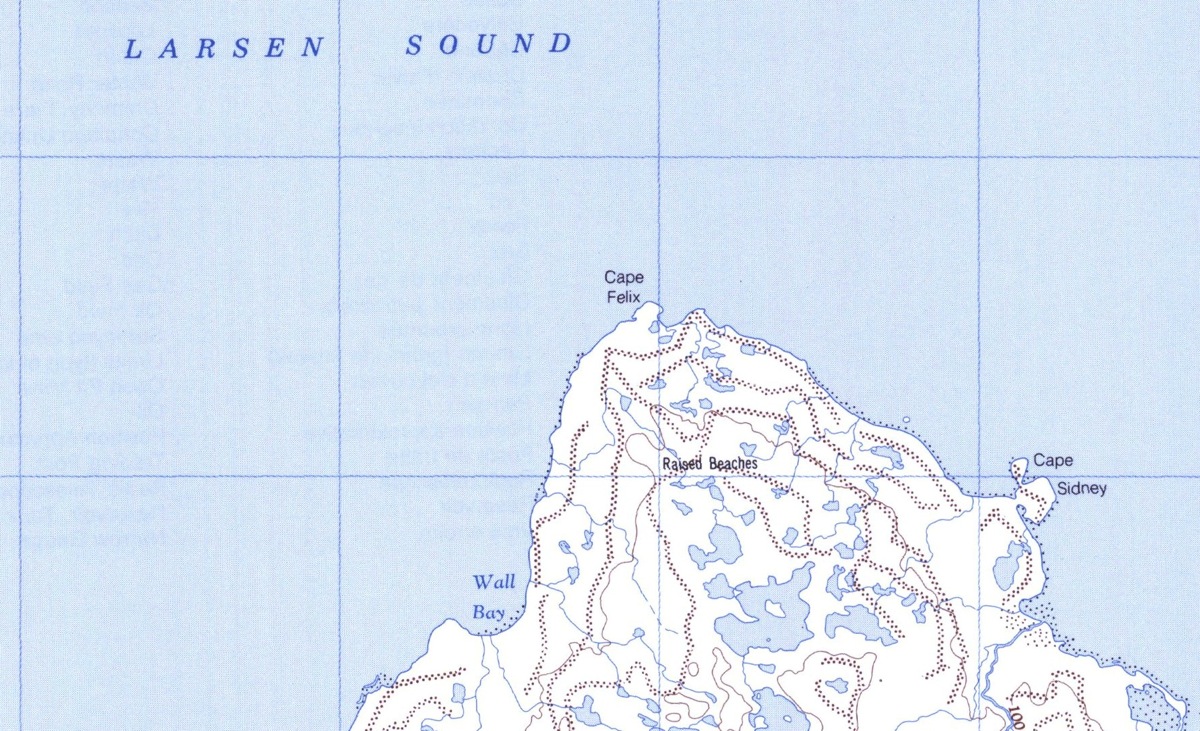
While most modern-day Franklin hunters, including Parks Canada, have focused their attention on areas southwest of King William Island, Mr. Rondeau is confident the shipwrecks are in fact located north of the island, in the waters of Larsen Sound.
The missing ships, HMS Terror and HMS Erebus, were part of an 1845 British expedition led by Sir John Franklin to map the Arctic and locate the fabled Northwest Passage to Asia.
The vessels and their crews never returned, and since the late 1840s, dozens of search efforts, both public and private, have been mounted to answer one of the Arctic's greatest riddles. Graves of some of the crew and wreckage from the expedition are all that have been recovered.
The search for the Franklin expedition over the decades has become a lifelong obsession for many people around the world, but Mr. Rondeau, who is head of Alberta-based ProCom Diving Services, said he picked the project primarily to test newly developed sonar equipment in the Arctic.
A sidebar to the story highlighted some of the attempts to find Franklin or any relics. It notes that on Canada's Centenial in 1967, Canadian soldiers took part in "Project Franklin" to mark the occasion in which they conducted air, land and sea searches. I did not know about that historical Canadian government involvment in the search efforts. They seem to have gone a fair bit further then than the current government is prepared to do now, when searchers can't even get a ship.
The reference to the Canadian Centennial does serve as an occasion for me to raise a topic I expect to come back to many times as this website progresses. Franklin set sail in 1845. The bicentennial 170th anniversary of that date is coming up in a few years and some of the events that could be planned, like a new book or an expedition retracing his steps or a re-enactment of the departure, would take a lot of time and planning.
So not only is it my hope to collect here all information about any planned events, I hope to be involved and would like to know of any events or plans so that I may participate and help somehow. It is still a bit premature, here in 2009, but feel free to send me an email or a comment if you become aware of any Franklin Bicentennial 170th anniversary plans.
The Parks Canada expedition in search of Franklin's ships may be off, but privately-funded ProCom Diving Company's "Finding Franklin: 2009 Expedition" is still going ahead this summer.
The expedition will will depart from Resolute and travel south to around Larsen Sound - following the same route used by Franklin, and be led by Robert Rondeau, chief marine archeologist and President of ProCom. They will conduct a non-intrusive remote sensing survey underwater using side scan sonar aboard the Arctic research vessel, the Aurora Magnetica.
The search for the Northwest Passage was one of the last frontiers of exploration in the Victorian Age. In 1845 the British Admiralty organized one more attempt to find it. Two ships, Erebus and Terror, under the command of Sir John Franklin would undertake an expedition. Their mission, to find a route through the Canadian Arctic linking the Atlantic and Pacific oceans. Two months after leaving England both ships were seen entering Lancaster Sound at the northern end of Baffin Island. That was the last time any European ever saw them. In 1859, the members of a search expedition, organized and paid for by Sir John’s widow, found what remains the best source of evidence as to the fate of the Franklin Expedition. On the northwest coast of King William Island they discovered a cairn made of stones. Inside was an empty food tin containing a note. It had been written by the captain of the Erebus, Capt. James Fitzjames, and his second-in-command, Lt. Graham Gore.
The note confirmed the physical evidence found by the search party: That in late April, 1848, the crew had abandoned their two ships and had headed south across King William Island on foot.
The “Victory Point Letter,” written on April 25th, 1848, by Captain Fitzjames accurately states the location of the cairn. It also lists the last known position of both ships - which had been abandoned three days before. Both the Erebus and Terror, the letter stated, were five leagues, approximately 28 kms, northwest of the cairn.
Finding what remains of the Erebus and Terror would be one of the greatest marine archaeological finds of all time - rivaling the discovery of Titanic or Bismark.
The 2009 Expedition
A team of archaeologists and documentary film makers will attempt to find evidence of both shipwrecks. They will conduct a non-intrusive remote sensing survey underwater using side scan sonar aboard the Arctic research vessel, the Aurora Magnetica. It is a prototype of a new generation of small research ship purpose-designed for the exploration of the Arctic’s remotest regions. At 61 feet long, it’s much smaller than conventional ice-strength vessels. And, with a draft of less than 5 feet, it has the ability to manoeuvre in shallow water - unlike bigger vessels.
The expedition will depart from Resolute and travel south - following the same route used by Franklin.
For more information about the expedition please contact the expedition’s leader, Rob Rondeau.
rob@procomdiving.com tel. (403) 575-5671 The Aurora Magnetica, a new generation of ice-strength research vessel.
UPDATE: Russell Potter in the comments provided this link to a map segment that he uploaded showing Larsen Sound, which I reproduce here:
This report is rather unfortunate: the Canadian government has called off a planned expedition to search for the two Franklin ships, HMS Terror and HMS Erebus. It seems more bad luck in terms of coordination with Arctic plans for suitable ships from the Canadian Forces or the Coast Guard, rather than budgetary cut-backs.
I remember quite a bit of excitement last year when the Canadian government announced a $75,000 contribution to the Parks Canada expedition headed up by Robert Grenier, a senior underwater archeologist.
The expedition last summer resulted in some artifacts, most notably some sheets of iron that Mr. Grenier identified as coming from different Franklin expedition ships. You can see Peter Mansbridge interview Mr. Grenier here.
Franklin Expedition search called off
A government-sponsored search for Sir John Franklin's missing ships in the High Arctic has been scrubbed this summer, but private entrepreneurs hope to score an archeological coup by conducting their own search in late August.
Ottawa announced last August it was mounting an effort to find Franklin's two ships, the Erebus and Terror, which went missing more than 160 years ago.
Some graves of the crew members have been discovered over the years and relics have been uncovered.
But the search for the missing ships has become a potential prize — made even bigger when then Federal Environment Minister John Baird announced Ottawa was backing a search and that experts would be relying on Inuit knowledge to aid the search.
On Thursday, Parks Canada's senior marine archeologist, Ryan Harris, confirmed the official search for the Franklin ships has been called off for this summer.
Harris said Parks Canada had asked the navy for ship time but therewon't be a Canadian Forces ship in the vicinity and the search team was unable to get time aboard one of the Canadian Coast Guard's icebreakers.
"Unfortunately this particular season, Coast Guard had other scientific programs that they had to prioritize. But we intend to continue with the survey next year. The Coast Guard remains a very important partner for us in this three-year project."
Gjoa Haven historian Louis Kamookak, who is part of Parks Canada's Franklin team, says it was a three-year project and is disappointed that it is on hold this year.
"Briefly I talked with the guy from Parks [Canada] and what I'm hearing is that this summer the icebreaker has some other commitments."
Nine years ago, Kamookak approached the crew of the the RCMP ship St. Roch II. He invited the skipper, RCMP Sgt. Ken Burton, to see some remains from the Franklin Expedition on the shores of one of the Todd Islands.
Locating ships would be big news Unlike other remains found over the years, the Todd Islands graves were located quite far south from where Franklin's two ships were believed to have been stuck in the ice.
Other sites showed signs of cannibalism, and that the 128 members of Franklin's crew died of disease and lead poisoning soon after they abandoned their ships.
The Inuit say they have known about this site since the 19th century, but Kamookak thinks others could well find Franklin's ships first.
For example, Rob Rondeau, a marine archeologist with Alberta-based ProCom Diving Services, has teamed up with a British archeologist to conduct their own search for Erebus and Terror in late August.
"We're quite confident based on the research that we've done that we have a pretty good idea of where the remains of the two ships are," said Rondeau. "We'll actually be using some state-of-the-art sonar equipment."
Rondeau said Britain remains fascinated with the Franklin story and locating the ships would be big news in the United Kingdom and in Nunavut.
Fourteen of the officers of HMS Terror and HMS Erebus, print from Richard Beard's famous daguerreotypes. A great discussion of the daguerreotypes can be read here and here.
HMS Erebus:
Officers
Sir John Franklin, Captain, Commanding the Expedition James Fitzjames, Commander Graham Gore, Lieutenant H.T.D. Le Vesconte, Lieutenant James Walter Fairholme, Lieutenant Robert Orme Sergeant, Mate Charles Frederick Des Voeux, Mate Edward Couch, Mate Henry Foster Collins, Second Master James Reid, Ice Master Stephen Samuel Stanley, Surgeon Harry D.S. Goodsir, Assistant Surgeon Charles Hamilton Osmer, Purser
Warrant Officers
John Gregory, Engineer Thomas Terry, Boatswain John Weekes, Carpenter
Petty Officers
John Murray, Sailmaker, age 43 William Smith, Blacksmith, age 28 Thomas Burt, Armorer, age 22 James W. Brown, Caulker, age 28 Francis Dunn, Caulker's Mate, age 25 Thomas Watson, Carpenter's Mate, age 40 Samuel Brown, Boatswain's Mate, age 27 Richard Wall, Ship's Cook, age 45 James Rigden, Captain's Coxwain, age 32 William Bell, Quartermaster, age 36 Daniel Arthur, Quartermaster, age 35 John Downing, Quartermaster Robert Sinclair, Captain of the Foretop, age 25 John Sullivan, Captain of the Maintop, age 28 Phillip Reddington, Captain of the Forecastle, age 28 Joseph Andrews, Captain of the Hold, age 35 Edmund Hoar, Captain's Steward, age 23 John Bridgens, Subordinate Officers' Steward, age 26 Richard Aylmore, Gunroom Steward, age 24 William Fowler, Purser's Steward, age 26 John Cowie, Stoker Thomas Plater, Stoker
Able Seamen
George Thompson, age 27 John Hartnell, age 25 John Stickland, age 24 Thomas Hartnell, age 23 William Orren, age 34 William Closson, age 25 Charles Coombs, age 28 John Morfin, age 25 Charles Best, age 23 Thomas McConvey, age 24 Henry Lloyd, age 26 Thomas Work, age 41 Robert Ferrier, age 29 Josephus Geater, age 32 Thomas Tadman, age 28 Abraham Seeley, age 34 Francis Pocock, age 24 Robert Johns, age 24 William Mark, age 24
Royal Marines
David Bryant, Sergeant, age 31 Alexander Pearson, Corporal, age 30 Robert Hopcraft, Private, age 38 William Pilkington, Private, age 28 William Braine, Private, age 31 Joseph Healey, Private, age 29 William Reed, Private, age 28
Boys
George Chambers, age 18 David Young, age 18
HMS Terror:
Officers
Francis Rawden Moira Crozier, Captain Edward Little, Lieutenant George Henry Hodgson, Lieutenant John Irving, Lieutenant Frederick John Hornby, Mate Robert Thomas, Mate Giles Alexander McBean, Second Master Thomas Blanky, Ice Master John Smart Peddie, Surgeon Alexander McDonald, Assistant Surgeon E.J. Helpman, Clerk in Charge
Warrant Officers
James Thompson, Engineer John Lane, Boatswain Thomas Honey, Carpenter
Petty Officers
Thomas Johnson, Boatswain's Mate, age 28 Alexander Wilson, Carpenter's Mate, age 27 Reuben Male, Captain of the Forecastle, age 27 David McDonald, Quartermaster, age 45 John Kenley, Quartermaster William Rhodes, Quartermaster, age 31 Thomas Darlington, Caulker, age 29 Samuel Honey, Blacksmith, age 22 John Torrington, Leading Stoker, age 19 John Diggle, Cook, age 36 John Wilson, Captain's Coxwain, age 33 Thomas R. Farr, Captain of the Maintop, age 32 Harry Peglar, Captain of the Foretop, age 37 William Goddard, Captain of the Hold, age 39 Cornelius Hickey, Caulker's Mate, age 24 Thomas Jopson, Captain's Steward, age 27 Thomas Armitage , Gun-room Steward, age 40 William Gibson, Subordinate Officers' Steward, age 22 Edward Genge, Subordinate Officers' Steward, age 21 Luke Smith, Stoker, age 27 William Johnson, Stoker, age 45
Able Seamen
George J. Cann, age 23 William Strong, age 22 David Sims, age 24 John Bailey, age 21 William Jerry, age 29 Henry Sait, age 23 Alexander Berry, age 32 John Handford, age 28 John Bates, age 24 Samuel Crispe, age 24 Charles Johnson, age 28 William Shanks, age 29 David Leys, age 37 William Sinclair, age 30 Goerge Kinnaird, age 23 Edwin Lawrence, age 30 Magnus Manson, age 28 James Walker, age 29 William Wentzall, age 33
Royal Marines
Solomon Tozer, Sergeant, age 34 William Hedges, Corporal, age 30 William Heather, Private, age 37 Henry Wilkes, Private, age 28 John Hammond, Private, age 32 James Daly, Private, age 30